Saturday, August 23, 2008

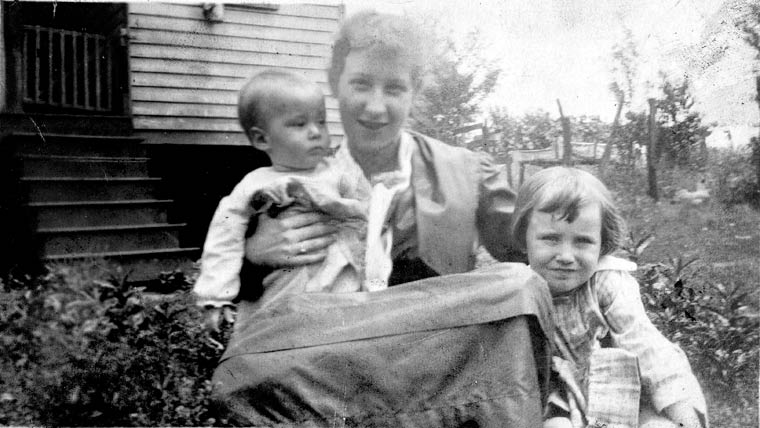
Lot 4, Woolen Mills Road


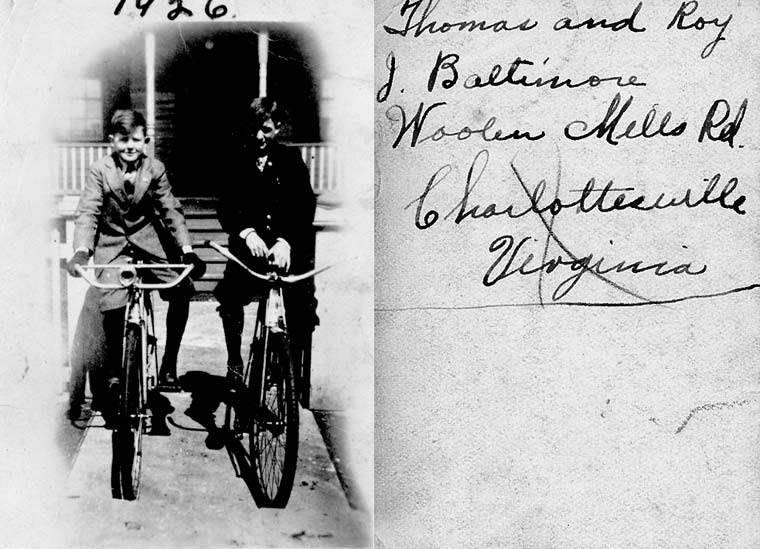
photo courtesy of Schultz-Covert Collection

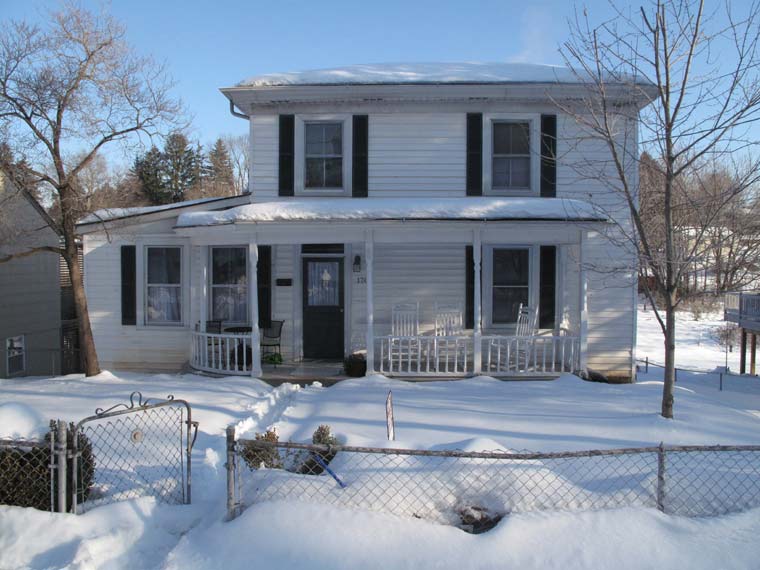
This photo was found recently in the house at 1809 Woolen Mills Road, located on lot 4 of the 1887 subdivision of land north of Woolen Mills Road (Albemarle County DB 88 Page 260). In 1920, according to the US Census, 1809 was inhabited by Athalia Spencer, her husband John and sons William and John.
A "J Shisler" is listed on the Woolen Mills payroll during the decade of the 20's. But in the year 1920 the census taker records John (53 y.o.) and John junior (19 y.o.) as railroad bridge carpenters.

Thursday, August 7, 2008

wages


1809 Woolen Mills Road

It is extremely hard even to estimate wage rates at the Charlottesville Woolen Mills. The annual payroll increased rather steadily over the years--from $15,700 in 1883 to $37,500 in 1896 and $52,400 in 1913. In 1881 an average annual wage of only $270 prevailed. Eleven years later, this figure stood at $311 but declined to about $300 in 1906. However, such estimates show only a trend, they give no clue to hourly rates for different classes of workers. Since even the length of the work day and work week is unknown, one cannot judge the liberality or lack of it on the part of the management. It is clear, however, that wage increases were smaller in proportion to profits than were dividends of cash and stock.--Harry Poindexter

Tuesday, August 5, 2008

fifty families


Since these people were nearly all from nearby communities, the mill apparently avoided the worries of unstable foreign labor which comprised most of the workers in the woolen industry. In many instances the mill employed several members of a single family--a further stabilizing factor. In 1892 half of the 115 workers were women and, according to a local paper, their wages were "good." At that time, all the employees were obtained from only fifty families, which raised living standards more than annual wages might indicate.--Harry Poindexter

Sunday, August 3, 2008

footnote


In order that "his high ideals, abounding faith, and honesty of purpose may live after him as an inspiration to future generations," Marchant's second wife, Fanny Bragg Marchant, bequeathed the bulk of his estate to the University of Virginia on her death in 1926. This gift provided for a loan fund for "deserving and needy students" and for two annual fellowships of $450 each to be given to students studying to be medical missionaries or preparing to enter the ministry. Bearing Marchant's name, these awards were fitting memorials to a man who contributed much to the "industrial, civic, educational and religious life" of Charlottesville. Will of Fanny Bragg Marchant in Comptroller's Office, University of Virginia.--Harry Poindexter

Wednesday, July 30, 2008

workforce size


Only by chance can one find out how large the laboring class of the mill was during these years. There had been about seventy employed at the time of the fire, but larger facilities required more hands after 1882. By the early nineties the number had swelled to 115. In 1906 the force of 150 employees was double that of 1882. These figures indicate that the Charlottesville mill was considerably larger than most American woolen mills, but very small if compared to many in New England.--Harry Poindexter

Tuesday, July 29, 2008

Aunt Louise


Jean, Louise and Brenda Baltimore courtesy of the Baltimore-Pritchett Collection

Life was not so dull as these attitudes might suggest. Newspaper items tell of occasional band concerts and annual Christmas parties in the new chapel. Now and then on a warm, pleasant evening, employees and their families got together for outdoor suppers of oysters, creams, cakes, nuts, fruits, lemonades, etc. Such events brightened considerably the end of a long working day.--Harry Poindexter

Monday, July 28, 2008

marriage of morality and business


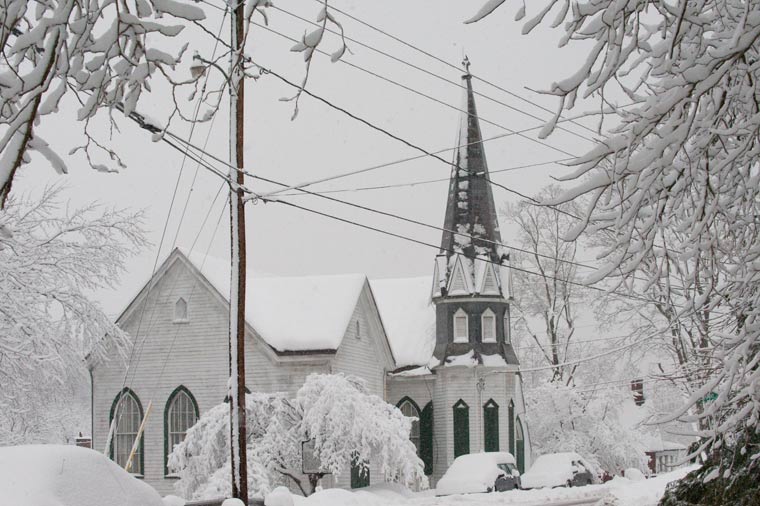
detail, Union Chapel, 1930

Naturally any person hoping for a supervisory job needed "exemplary character" as well as ability. "The management," a visiting reporter penned in 1892, "recognize [sic] the responsibility of his position in being placed over a large number of employees, many of whom are quite young, and in the formation of whose character the head of the department is largely instrumental, and they make it a necessary qualification...that he be a man of strict sobriety and good morals." The influence of men like Marchant and Knowles is quite evident in this marriage of morality and business.

Results were encouraging. After twenty years as Commonwealth's Attorney, Micajah Woods in 1892 could recall no case in which a mill worker was a defendant. In fact, "he knew of no community more conservative, sober and moral."--Harry Poindexter